The transition from being a mate to a qualified professional
For many people working in the trades, there comes a point where you realise that having the skills is only half the battle. You might have been on-site for years, you might be the person everyone goes to when a difficult roof needs pitching or a bespoke staircase needs fitting, but without the right piece of paper, you are often stuck. This is where the conversation around the Carpentry NVQ usually begins. It is not just about proving you can use a chisel or a chop saw; it is about formalising your experience so that the rest of the industry recognises your value.
The construction industry in the United Kingdom has shifted significantly over the last decade. The days of rocking up to a site with a bag of tools and getting a start based on a verbal recommendation are largely gone, especially on larger commercial projects. Major contractors now require proof of competence, which almost always translates to a CSCS card. To get that card, you need a National Vocational Qualification (NVQ). It is the standard that separates the casual labourers from the skilled professionals who are serious about their career longevity.
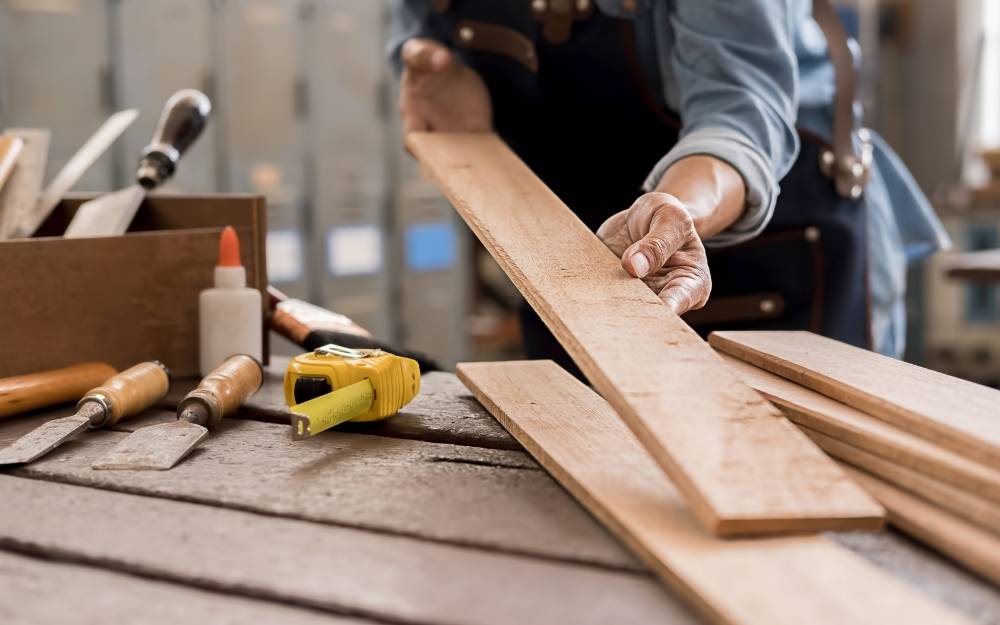
What exactly is a Carpentry NVQ and how does it work
An NVQ is fundamentally different from the types of exams you might have sat at school. There are no silent halls, no ticking clocks, and no trick questions designed to catch you out. Instead, a Carpentry NVQ is a work-based assessment. This means that you are judged on your ability to do the job in a real-world environment. It is about demonstrating that you can work safely, efficiently, and to the required industry standards while you are actually on the clock.
The process is designed to be as unobtrusive as possible. An assessor will typically visit you on-site to observe your work. They are looking for evidence that you understand the principles of carpentry and joinery, but more importantly, that you can apply them. They will look at how you organise your workspace, how you handle materials, and how you interact with other trades. It is a holistic approach to qualification that respects the fact that most carpenters learn best by doing, not by reading textbooks.
The different levels of qualification
When you start looking into getting qualified, you will notice different levels. Choosing the right one depends on where you are in your career and what your goals are for the future. Here is a breakdown of what you can usually expect:
- Level 2 NVQ: This is the most common starting point for those looking to get their Blue Skilled Worker CSCS card. It covers the essential aspects of site carpentry, such as first and second fixing, structural carcing, and basic maintenance.
- Level 3 NVQ: This is aimed at more experienced carpenters or those looking to move into supervisory roles. It involves more complex tasks like roofing, stairs, and specialised joinery. This level leads to the Gold Advanced Craft CSCS card.
- Level 4 and above: These are generally for those moving into site management or senior technical roles where the focus shifts from hands-on work to planning and oversight.
Why the industry demands these qualifications now
You might wonder why there is such a push for every chippy to have a Carpentry NVQ. The primary driver is health and safety. The construction industry is one of the most hazardous sectors to work in, and the government, along with major insurance companies, wants to ensure that everyone on-site has a baseline level of safety awareness. By requiring an NVQ for a CSCS card, they ensure that every worker has been assessed by a professional and understands the risks involved in their trade.
Beyond safety, there is the issue of quality control. When a developer hires a firm, they want to know that the work will be done to a high standard. Having a workforce that is fully qualified provides a level of assurance that the project will meet building regulations and long-term durability standards. For the individual carpenter, this means that having the qualification makes you much more employable. You are no longer limited to small domestic jobs; you can walk onto any major site in the country and prove you belong there.
The practical benefits of being qualified
If you are still on the fence about whether to go through the assessment process, it is worth considering the tangible benefits that come with it. It is not just about the card in your wallet; it is about how it affects your day-to-day life and your bank account.
- Access to better sites: Most high-paying commercial and industrial projects require a valid CSCS card, which you can only get with an NVQ.
- Higher earning potential: Qualified carpenters generally command higher day rates than those without formal recognition.
- Career progression: If you ever want to become a site foreman or a project manager, the NVQ is the foundational step you cannot skip.
- Professional credibility: There is a certain level of pride that comes with being a ‘qualified’ tradesperson. It changes how clients and colleagues perceive your expertise.
How the assessment process actually feels
One of the biggest hurdles for experienced carpenters is the fear of the unknown. They worry that the assessment will be academic or that they will be asked to do things ‘the textbook way’ rather than the practical way they have used for twenty years. In reality, NVQ assessors are usually former tradespeople themselves. They know how a site works. They aren’t looking for perfection in a vacuum; they are looking for competence in a real-world setting.
The assessment usually involves a mix of methods. There is the ‘observation’ where the assessor watches you work. Then there is the ‘professional discussion’ where you talk through how you would handle certain situations or explain the reasoning behind a specific technique you used. You will also need to gather evidence, which can include photographs of your work, witness testimonies from supervisors, and copies of site inductions or risk assessments you have signed.
What you will be expected to demonstrate
While the specific units can vary depending on whether you are doing site carpentry or architectural joinery, there are some core areas that every Carpentry NVQ will cover. These are the building blocks of a professional career in the wood trades:
- Conforming to general health, safety, and welfare in the workplace.
- Conforming to productive working practices.
- Moving, handling, and storing resources safely and efficiently.
- Installing first fixing components (like floor joists and door frames).
- Installing second fixing components (like skirting boards and architraves).
- Setting up and using transportable 240v or 110v power tools.
The flexibility of modern training providers
One of the best things about the current system is that you don’t have to take weeks off work to get qualified. Most providers offer what is known as OSAT (On-Site Assessment and Training). This is specifically designed for people who are already working in the trade. The assessor comes to you. This means you can continue to earn your living while simultaneously working towards your qualification. It removes the financial barrier of lost wages, which was historically the biggest reason why people avoided getting their papers.
Furthermore, many providers now use digital platforms to manage the evidence. You can often upload photos and videos of your work directly from your phone, making the whole process much more streamlined. The focus is on making it work for the carpenter, not the other way around. Once you have completed the required units and the assessor is satisfied with your competence, your portfolio is moderated, and your certificate is issued. From there, applying for your Blue or Gold CSCS card is a straightforward process, opening up a whole new world of professional opportunities.
Choosing to pursue a qualification is an investment in yourself. The industry is constantly evolving, and the requirements for workers are only going to become more stringent. By securing your NVQ now, you are future-proofing your career and ensuring that you can always find work, no matter how the economic landscape shifts. It is a move from being a worker who happens to do carpentry to being a recognised professional in a highly respected trade.

Chloe Matthews is an entertainment news writer with a keen eye for celebrity trends, movie releases, and the latest in pop culture. She specializes in delivering fresh, engaging content that keeps readers up to date with the ever-evolving world of entertainment.